Gallbladder stones, commonly known as pathari, are a frequent health concern that can affect anyone, though they are more common in women and older adults. The gallbladder, also called pitthi thali, is a small organ located under the liver on the right side of the body. Its main function is to store bile (pith) produced by the liver, which helps in the digestion of food.
When we eat, the gallbladder releases bile into the digestive tract to help break down fats. However, sometimes solid particles form inside the gallbladder, resulting in stones. These stones can remain silent or cause various health issues.
Symptoms of Gallbladder Stones
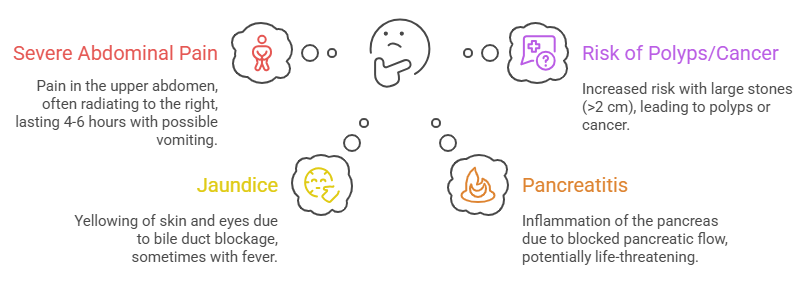
The symptoms of gallbladder stones can vary from mild to severe:
- Severe Upper Abdominal Pain
The most common symptom is pain in the upper part of the abdomen, often radiating to the right side of the body. This pain may last 4 to 6 hours, though in some cases, it can persist longer. Some patients may also experience vomiting.
- Yellowing of Skin and Eyes (Jaundice)
If a stone slips into the bile duct, it can block the flow of bile from the liver, leading to jaundice and sometimes fever.
- Pancreatitis
The pancreas produces enzymes for digestion. Gallbladder stones can block pancreatic flow, causing acute pancreatitis, a serious and potentially life-threatening condition.
- Risk of Polyps and Cancer
Large stones, typically greater than 2 cm, may increase the risk of gallbladder polyps or cancer.
Causes and Risk Factors
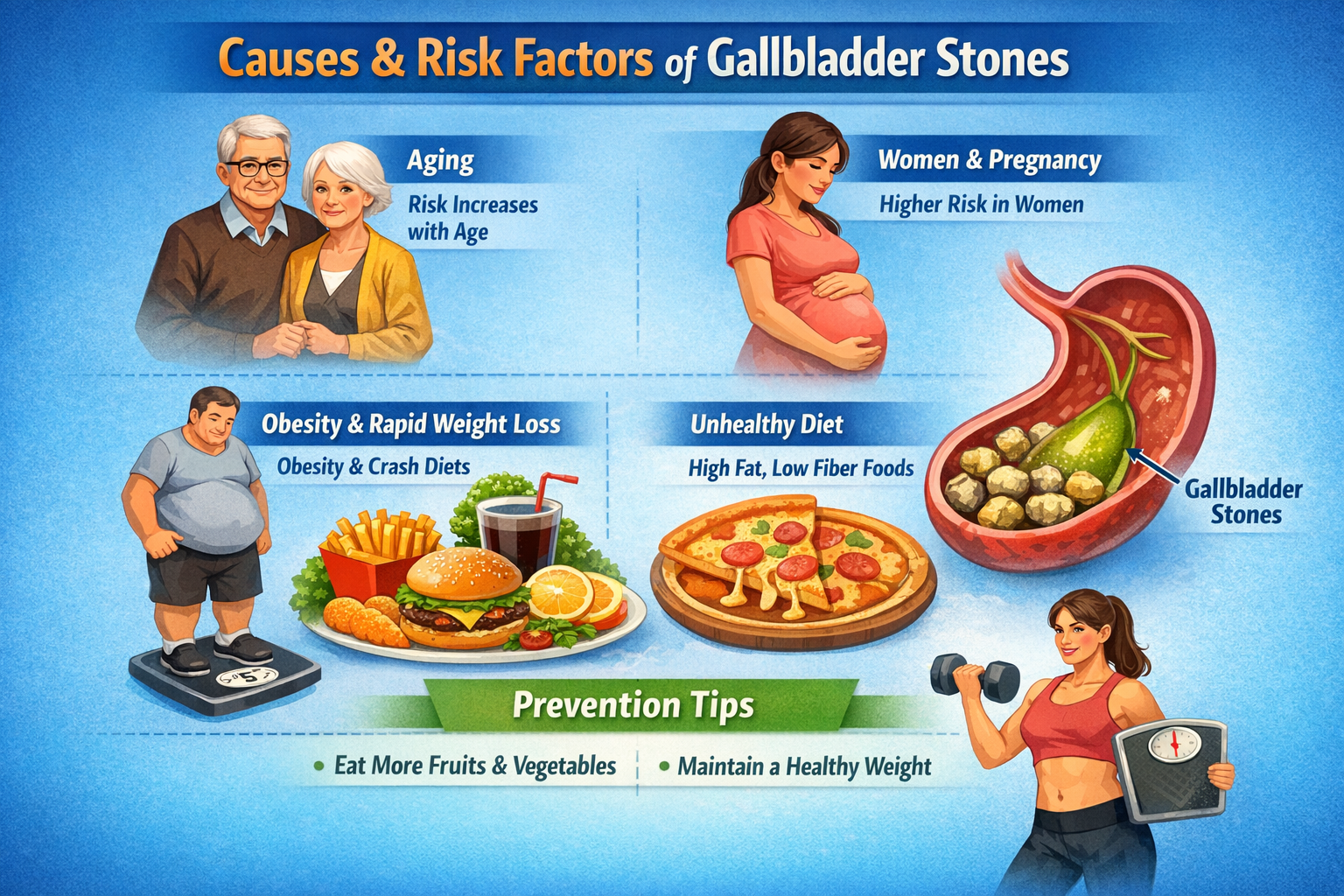
The exact cause of gallbladder stones is not fully understood, but several risk factors are known:
- Age: The likelihood of developing stones increases with age.
- Gender: Women are more prone, especially during pregnancy.
- Obesity and Weight: Higher body weight and rapid weight loss (e.g., post-bariatric surgery) increase the risk.
- Diet: A Western diet high in calories and fats but low in fiber can contribute to stone formation.
Prevention Tip: Reduce high-calorie foods, eat more fruits and vegetables, and maintain a healthy weight to lower your risk of gallbladder stones.
Diagnosis of Gallbladder Stones
Diagnosing gallbladder stones is relatively simple:
- Ultrasound
A non-invasive test where a probe is placed on the abdomen to visualize the gallbladder. It is effective for detecting most stones.
- Endoscopic Ultrasound (EUS)
Used for very small stones (less than 3 mm). An endoscope is inserted through the mouth with a tiny ultrasound device to examine the gallbladder more closely.
Treatment of Gallbladder Stones
The treatment depends on the severity of symptoms:
- Acute Pancreatitis or Blocked Bile Duct
- Patients with pancreatitis are admitted to the hospital for treatment.
- If stones block the bile duct (Pilea), an ERCP (Endoscopic Retrograde Cholangiopancreatography) procedure is performed to remove the stone before addressing the gallbladder.
- Symptomatic Stones
- Surgery is the standard treatment. The entire gallbladder is removed to prevent future complications.
- Medicines cannot cure gallbladder stones.
- Asymptomatic Stones
- Not all patients require immediate surgery.
- Surgery is recommended if the patient lives in a remote area or their profession makes emergency care difficult (e.g., pilots). Otherwise, surgery can be deferred until symptoms appear.
Conclusion
Gallbladder stones are common but manageable with timely diagnosis and treatment. Ultrasound is an effective diagnostic tool, and surgery remains the gold standard for treatment. Maintaining a healthy diet, controlling weight, and avoiding rapid weight fluctuations can help prevent gallstones.
If you experience persistent abdominal pain, jaundice, or nausea, it is crucial to consult a doctor promptly. Early detection and treatment can prevent serious complications like pancreatitis or gallbladder cancer.